Knee Pain Treatment in Huntington, NY
Knee pain can make daily tasks like bending, squatting and lifting very difficult. Knee pain can be especially limiting for athletes, gym-goers, and runners.
Common conditions of knee pain that we see include quad strains, knee osteoarthritis, meniscus tears, ACL tears/sprains and patellofemoral pain syndrome.
The knee is compromised of the tibiofemoral and patellofemoral joints. The knee’s natural shock absorber is compromised of the lateral and medial meniscus. The knee’s natural stabilizers are made up of the ACL, MCL, LCL, and PCL.
Sometimes the back or the hip can be involved in cases of knee pain. Since it is a case-by-case basis, we always perform a thorough screen of the surrounding, relevant structures anytime we suspect it may be involved.
Sometimes the fix for improving pain with knee bending or squatting can be addressed by determining the best squatting position for an individual. Often times, people who have pain with squatting demonstrate a knee dominant movement pattern that can sometimes be fully resolved by being instructed on how to use a more hip dominant movement pattern!
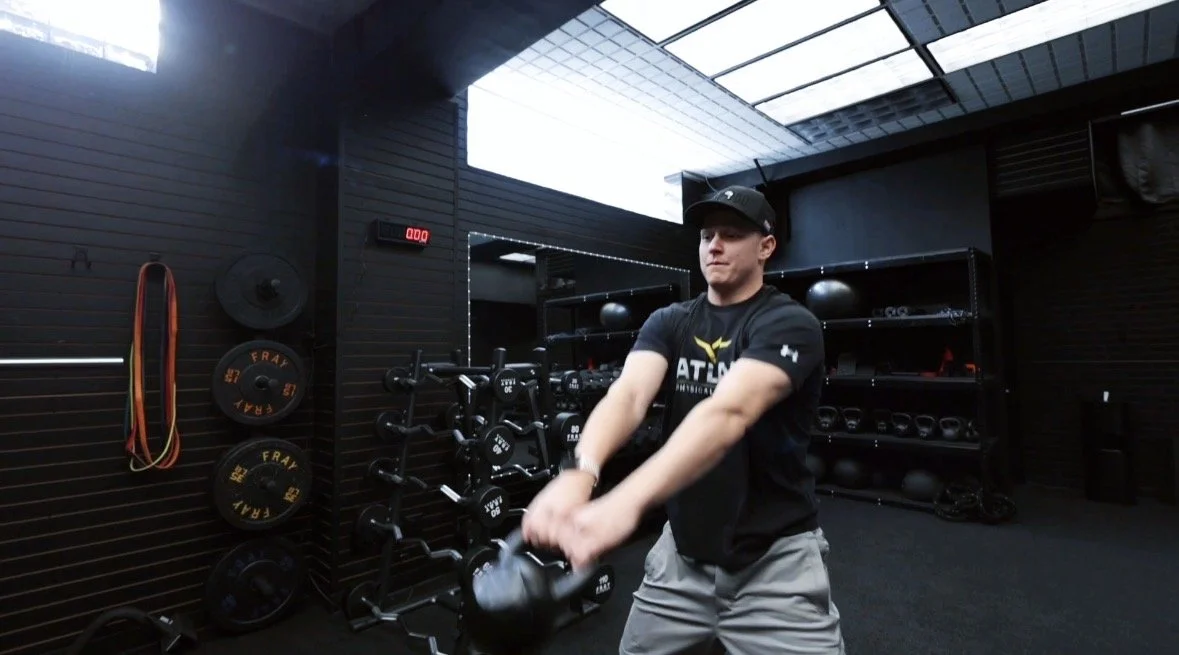
We perform a comprehensive evaluation to determine the root cause of individuals’ knee pain, as there are many different presentations and we believe that a “one size fits all” approach is not the best. Among the most common reasons for knee pain that we see on a regular basis is weakness of surrounding musculature, poor biomechanics or trouble having the patella/kneecap tracking during movement. Strengthening the lower leg has shown to be incredibly helpful for improving patellar tracking, biomechanics and pain with movement! (Zhang, Z. et al, European Journal of Medical Research, 2025) Our goal is to determine which movements help your knee pain and give you a strengthening regimen to meet you where you are at.
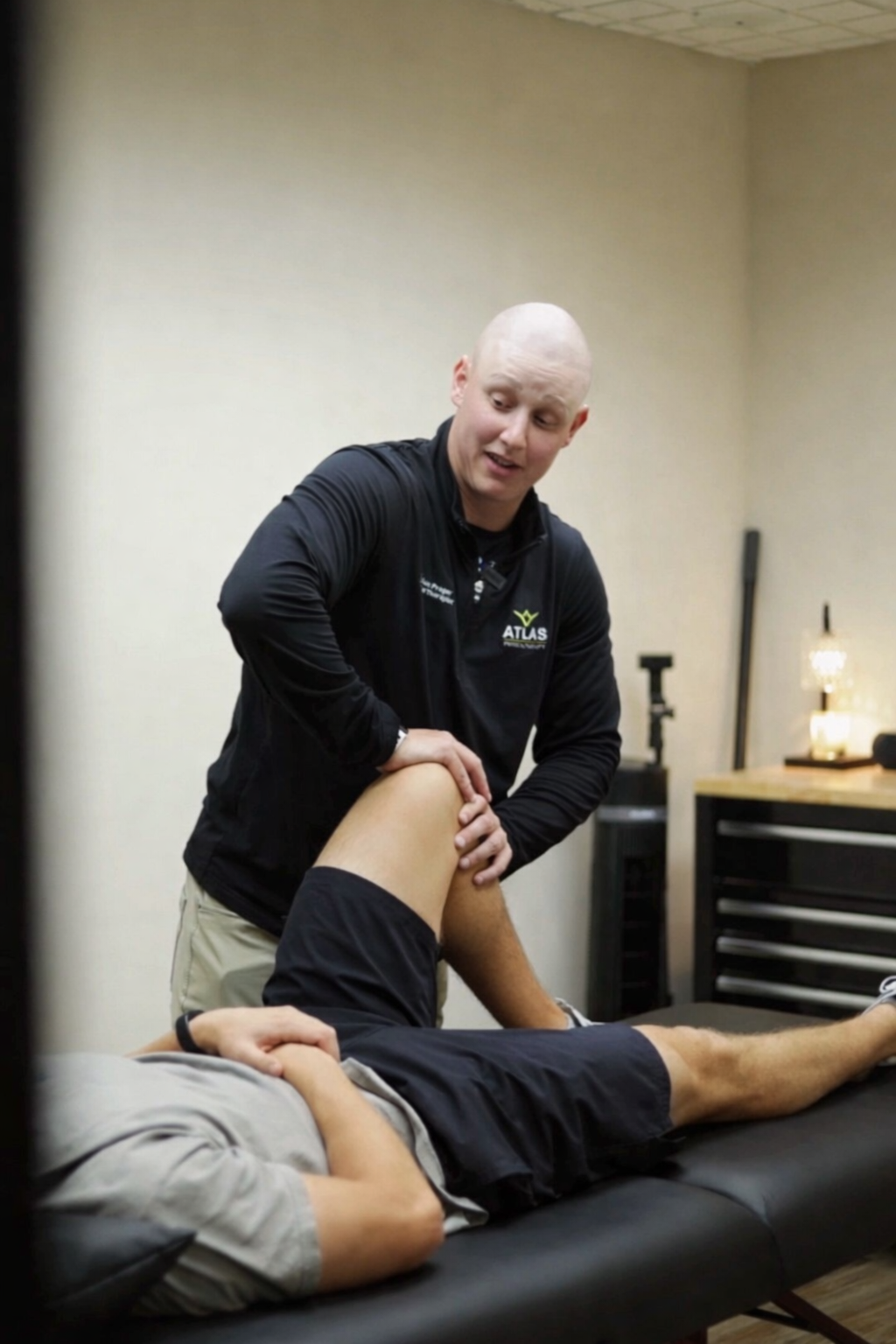
Of course, pain and stiffness can be a huge limiting factor. We offer many different treatment options to help manage pain and discomfort based on your individual presentation of knee pain including:
Joint mobilization
Soft tissue mobilization/massage
Myofascial release/cupping